

From evolving chip architectures to next-gen reminiscence hierarchies, today’s computing innovation calls for sooner selections, deeper insights, and agile R&D workflows. Whether Or Not you’re designing low-power edge units, optimizing I/O throughput, or evaluating new compute models like quantum or neuromorphic methods, staying ahead of the curve requires greater than technical know-how—it requires clever tools. PSA Licensed assists developers of their efforts to implement IoT safety that is easy-to-use and builds on the chip’s PSA-RoT. Having three easy-to-understand ranges of assurance makes it easy for IoT gadget makers to choose the chip with the appropriately sturdy PSA-RoT. Integrating the PSA-RoT with the system or system software turns into easier as chip distributors begin to integrate the performance into their SDKs and use the high-level PSA Functional APIs.
These cryptographic ensures could be confirmed remotely in real-time using a device like Keylime and even preserved for later verification with durable attestation. Whereas a TPM is a dedicated chip that gives specific, focused performance as a hardware root of belief, a Trusted Execution Environment (TEE) takes a very different approach. Central processing models (CPUs) which have TEE capabilities contribute to larger integrity guarantees for data and code, and higher https://www.techtraders.in/ confidentiality guarantees for knowledge, most often for a specific area of system reminiscence used for common objective computation. This can enhance the security posture for the purposes or workloads running in the confidential environment, as it removes implicit trust from these decrease stack levels. These similar strategies could be applied to software program provide chain security to reduce the chances that the pipeline building your components has been compromised. The Supply-chain Ranges for Software Artifacts (SLSA) is a specification framework to describe the maturity of a software supply chain.
Important Requirements To Safely Implement A Hardware Root Of Belief Onto A Chip
If they match, the server trusts the gadget; if not, it can refuse access or trigger a remediation workflow. When a SoC powers on, the processor begins executing from a fixed handle that points into the Boot ROM. This ROM accommodates the first-stage boot code and the general public key (or hash of the common public key) used to confirm the following stage. One built-in architecture combining post-quantum cryptography, hardware-rooted security, trusted computing and secure communications.
The hardware faithfully serves whoever the operating system says is authorised, so malware running with the user’s privileges on an unlocked device can request a signature exactly as the legitimate software can. Hardware storage defeats extraction, not misuse-in-place – which is why, in high-value designs, it issues that individual delicate operations are gated behind a biometric or PIN rather than the system unlock alone. When we’ve anchored our trust in one thing stable, we’re capable of build extra complicated relationships between providers that don’t need to depend on belief. This low-level component that we use to build belief between other parts is identified as a root of belief. As expertise evolves and new exploits are found, an algorithm (or implementation) could be thought-about trustworthy at some point, and lose that belief the subsequent.
Build Solutions Powered By Trusted Partners
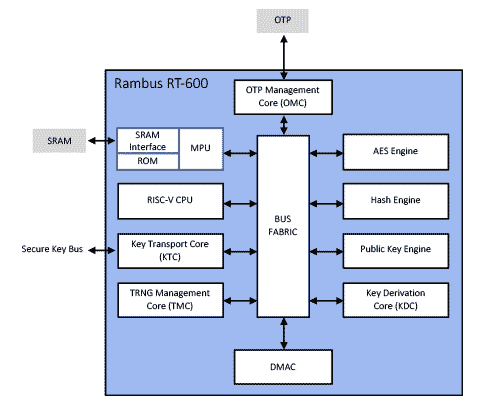
Once the system has booted securely, sure operations need ongoing safety during runtime — cryptographic key operations, biometric processing, DRM, secure payments. Protects cryptographic keys throughout their lifecycle using hardware-based isolation and trusted execution. Integrated with EnsoEntropy™, post-quantum cryptography and trusted computing, the Hardware Root of Trust offers a hardware-anchored safety basis for embedded, terrestrial and house techniques. PSA Certified provides organizations with an impartial security assessment that can be used to help construct in the best level of safety for connected devices from the ground up. As Quickly As the developer has determined the level of protection required for their device by doing a threat model, PSA Certified may help them select a chip with a suitably safe PSA-RoT.
For instance, several cryptographic algorithms that have been as soon as thought-about unbreakable are now identified to be flawed (DES, MD4, MD5, SHA1, etc.). Knowing your specific belief roots can help to mitigate any potential harm by figuring out what to exchange when that trust is misplaced. “Hardware-backed” is stretched to cover every little thing from a FIPS-certified secure element all the way down to strange software program keys which are merely encrypted by a hardware key while they do their actual work in ordinary reminiscence. Those usually are not equal claims, and a vendor ought to have the power to inform you which one they’re making.
Hardware Security Modules
- If an OS is used, the loader is validated utilizing the same personal key encryption, then lastly the OS, and application (if used).
- This protects the Secure Boot move, supplies complete asset safety, and enhances the general security of the system’s cryptographic features.
- A Root of Belief, commonly shortened to RoT, is the foundational safety component of a connected gadget.
- A Trusted Execution Environment (TEE) is a protected mode of the main software processor – ARM TrustZone is the canonical instance – operating a small trusted working system alongside the strange one.
A Root of Belief, or RoT, is often used as the begin line in a chain of belief. As A Result Of the Root of Trust is trusted by design, other parts can rely on it to verify software, shield cryptographic keys, validate system integrity, or establish trust in a tool. Roots of belief are often implemented in protected hardware or firmware, although trusted software program elements also can carry out root-of-trust capabilities. A system utilizing a TPM as a root of belief could make cryptographic ensures about its state that other systems can build on.

A designer of a connected fridge may decide that a PSA Licensed Level 2 chip is suitable, if they choose to use distinctive keys per system, as this is ready to protect them from the first risk of a distant software program attack. Per the Confidential Computing Consortium, a TEE should be hardware-based and attestable for the computation therein to be thought of confidential computing. Thus, not only is a hardware root of trust required, however attestation is a crucial piece of the security ensures supplied by any TEE. This is because the attestation carries the verifiable information that allows trust choices to be shaped in regards to the TEE.
We are satisfied sufficient of the distinction that our Signet authenticator reports it for every account – StrongBox, TEE, or Safe Enclave – somewhat than rounding the lot up to a single reassuring adjective. If startup speed is a factor in your design, SSL accelerators can offload a few of the algorithmic horsepower usually carried out by the principle processor. Entropy generating hardware can be used to achieve proper random Key technology, although a PUF can also be used, to some extent. For instance, if a consumer normally authenticates by typing the 4 words displayed by TypingDNA Confirm 2FA however can’t be acknowledged because of a major change in the way in which they sort, the verified phone number or e mail can be utilized because the fallback Root of Trust. This provides another method to verify the person’s identification with out treating the typing biometric result as the only source of trust. This creates an unbroken chain where belief propagates from the hardware root through each layer of the software program stack.
Hardware roots of trust are an under-utilized tool that every system architect should be thinking about. This can provide protection from several forms of attack, such as bundle hijacking, name typo squatting and Solar Winds-style infiltrations. A Trusted Execution Environment (TEE) is a protected mode of the main utility processor – ARM TrustZone is the canonical example – running a small trusted working system alongside the strange one. The logical isolation is robust, but the trusted and untrusted worlds share the same physical silicon, which makes for a bigger assault surface than dedicated hardware would current.